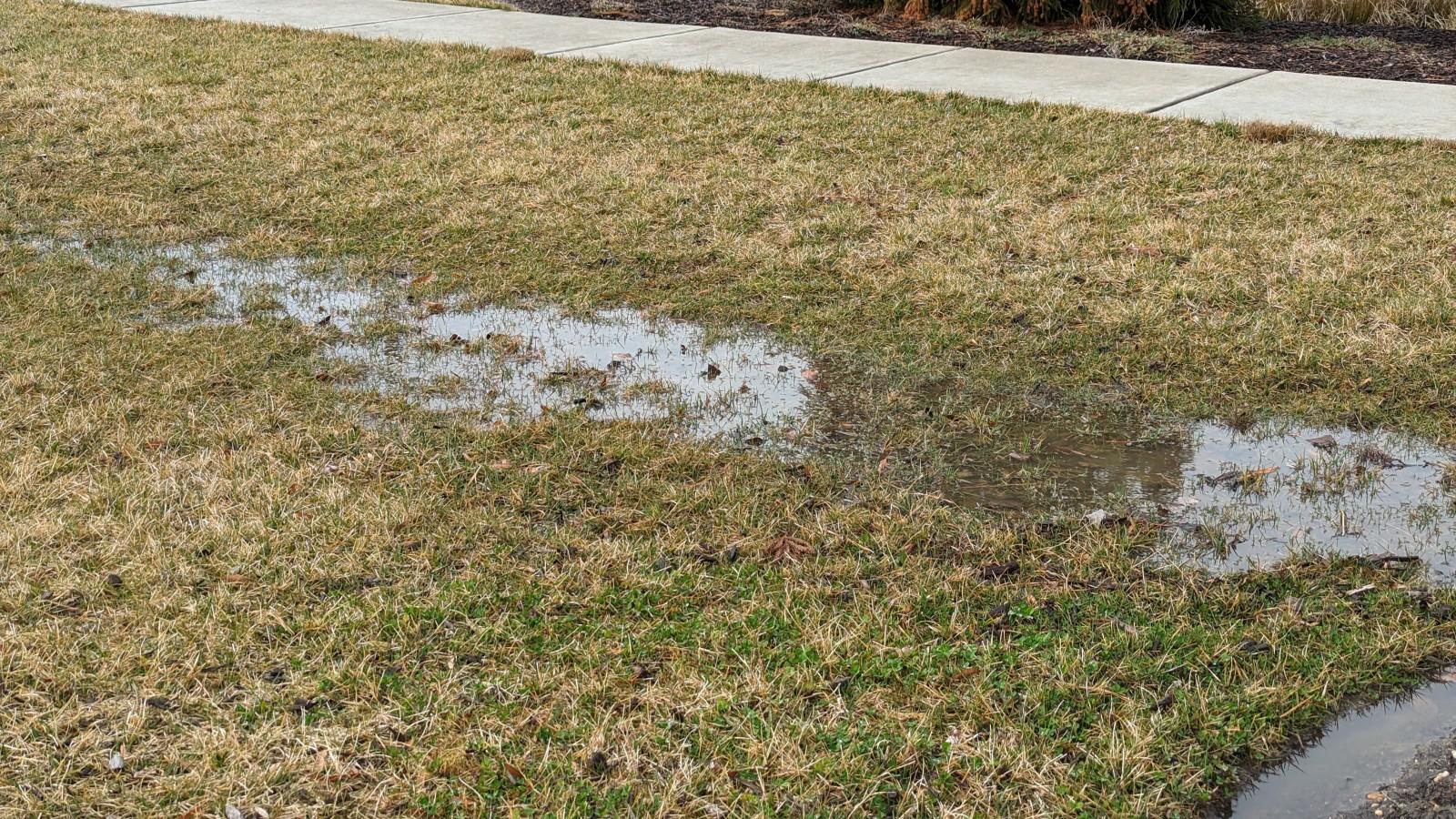
Standing water indicates areas of poor drainage. Photo: Miri Talabac, University of Maryland Extension
Updated: March 16, 2026
Key points about environmental and chemical lawn damage
Stressful growing conditions and exposure to certain chemicals can damage a lawn independently of pest or disease problems.
Grass weakened by drought stress, over-watering, soil compaction, and nutrient deficiencies can be more vulnerable to pests, diseases, and weed competition.
Following recommended lawn care practices will support vigorous growth to reduce the risk of damage and improve the lawn’s ability to recover.
Learn how to aerate, lime, fertilize, irrigate, mow, overseed, and dethatch.
Chemical damage
Pesticides, over-applied fertilizer, ice-melting salt, and dog urine can cause plant tissue damage from chemical exposure (phytotoxicity).
Spilled gasoline or oil leaks from lawn equipment can also damage or kill patches of lawn. Small amounts of gasoline volatilize (evaporate) quickly, so no action is usually necessary. Remove and replace the soil that has been saturated by a severe oil leak or spill. Consider replacing gasoline-powered equipment with electric models.
Pesticide injury
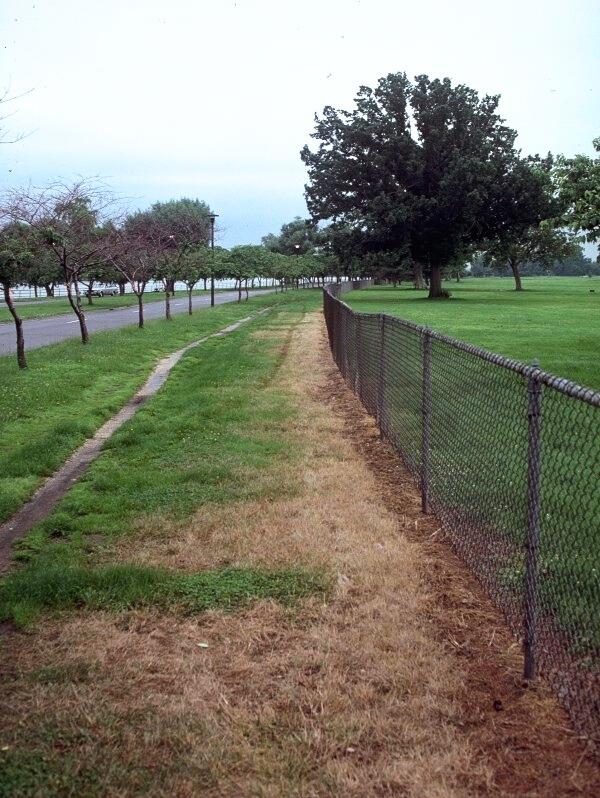
Drift damage from an herbicide application along a fence. Photo: James Sherald
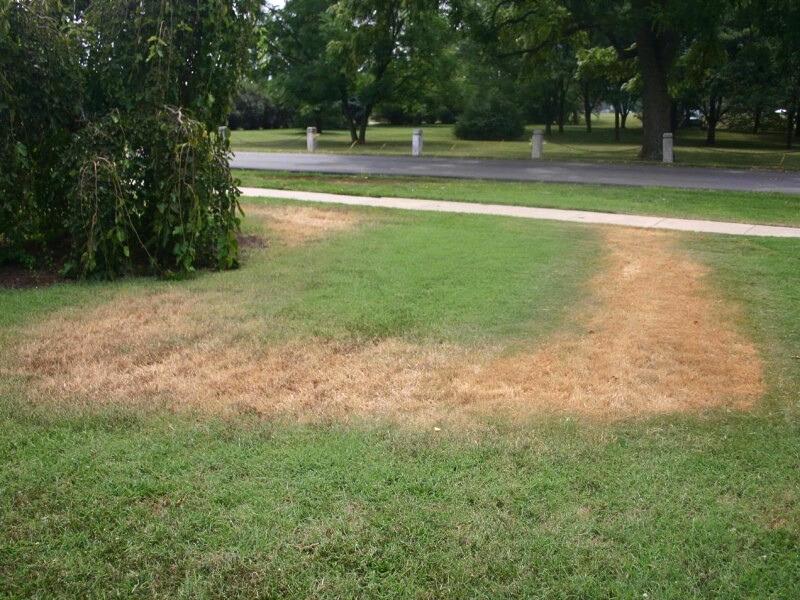
Misapplied pesticides (herbicides, fungicides, insecticides) can damage lawns, even when the product is labeled for use on turfgrass. Weather conditions during and after application, as well as the health of the grass, can affect its susceptibility to damage. For example, plant drought stress and temperatures above 85℉ make phytotoxicity more likely.
It is extremely important to read and follow pesticide label directions carefully. Many pesticides, including herbicides for controlling weeds, are available under different trade names with varying formulations and concentrations; each will have unique usage directions. The following conditions can increase the risk of pesticide damage:
Runoff or drift: anything that moves a chemical into untreated areas or onto non-targeted plants, such as rain and irrigation, evaporation, wind, or travelling (mowing or walking) through the application area
Incorrect product choice or use: selecting the wrong chemical for the situation (such as applying an ingredient not tolerated by fine fescue in a lawn of mixed tall and fine fescues, or applying a broadleaf weed killer in a mixed turf-clover lawn); or applying the product at too high a dosage or with improperly calibrated equipment
Contaminated application equipment: using the same equipment to apply different pesticides without thoroughly cleaning it between chemicals to remove residues, especially if herbicide was followed by another pesticide
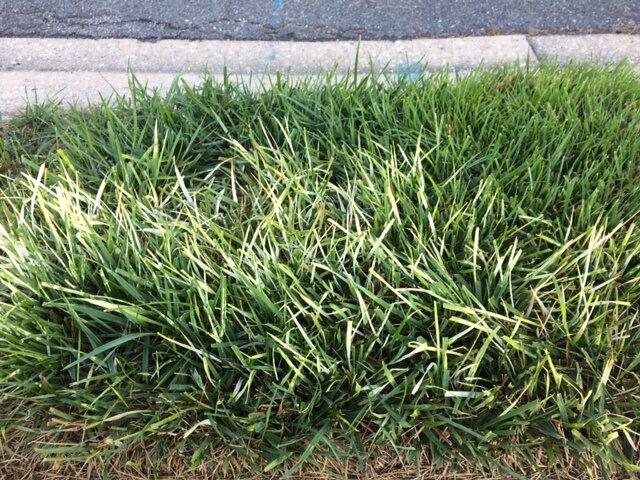
Sometimes herbicide exposure symptoms are unavoidable due to the herbicide’s mode of action (how the chemical works). For example, the active ingredient mesotrione can whiten grass blades, temporarily creating a bleached look. This chemical inhibits a plant enzyme that is essential for photosynthesis. Exposure symptoms tend to appear a week or less after application, and may persist for several weeks before the grass grows out of it. Such precautions are included in the product label information.
Mesotrione herbicide exposure symptoms on turfgrass. Photo: Ask Extension
Over-fertilization and ice melt injury
Concentrated nutrients from a fertilizer spill killed the grass. Photo: Adobe Stock
The mineral nutrients in a fertilizer formulation are “salts,” and they cause problems when they are too abundant. Exposure to ice melting products from pavement runoff and roadway splash can cause similar stress and damage to a lawn.
Avoid overdosing turfgrass by only fertilizing when supplemental nutrients are needed, based on laboratory soil test results and UMD recommendations for seasonal applications. Over-fertilization and high soil salts can harm roots and the beneficial soil microbes that support plant health, as well as make lawns more vulnerable to pest or disease problems.
Excessive fertilizer salts prevent roots from absorbing or retaining enough water.
High levels of some nutrients can interfere with the root system’s ability to absorb other needed nutrients.
Nutrient excesses can affect mycorrhizae (beneficial fungi living alongside roots) and soil bacteria that support plant health. These microbes may decline or interact with the plant in less beneficial ways, or the mix of microbial species living in the root zone may change.
Too much nitrogen can fuel lush growth that is an easier target for grass-feeding insects, clover mites, and fungal infections. High application rates of the ammonium or urea forms of nitrogen can acidify the soil, inhibiting earthworms that decompose thatch, and can increase the rate of thatch accumulation.
Symptoms of fertilizer “burn” usually resemble drought stress. Overuse of fertilizer can result from uneven spreader applications (having overlap between passes), incorrect spreader settings, and spills from spreaders or open bags of fertilizer.
Collect spilled fertilizer and dilute over-applications by irrigating. Soak the affected area with 1-inch applications of water (enough irrigation to fill a rain gauge to 1 inch), repeated two or three times, to help leach excess salts from the soil. Replant grass that dies from too much root loss.
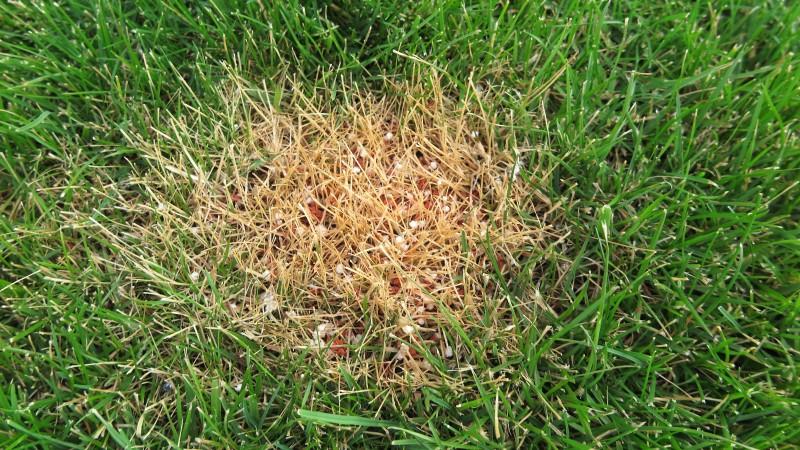
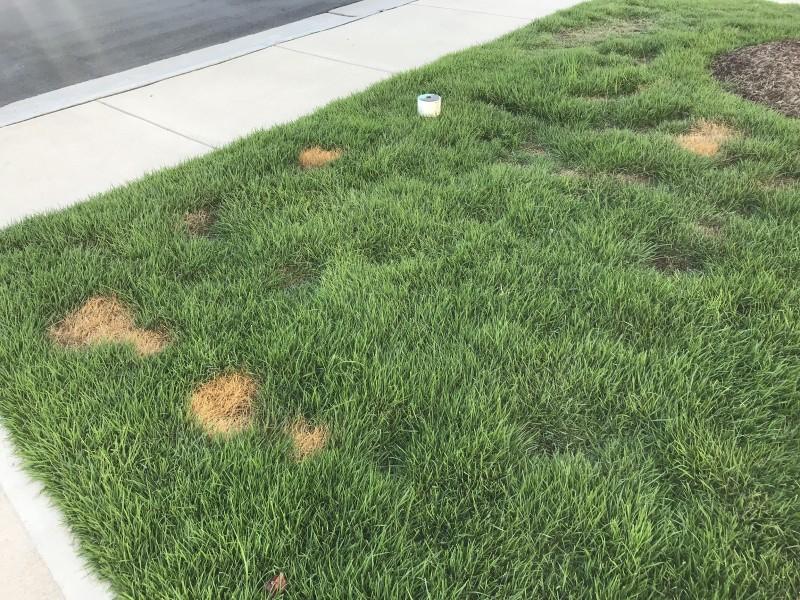
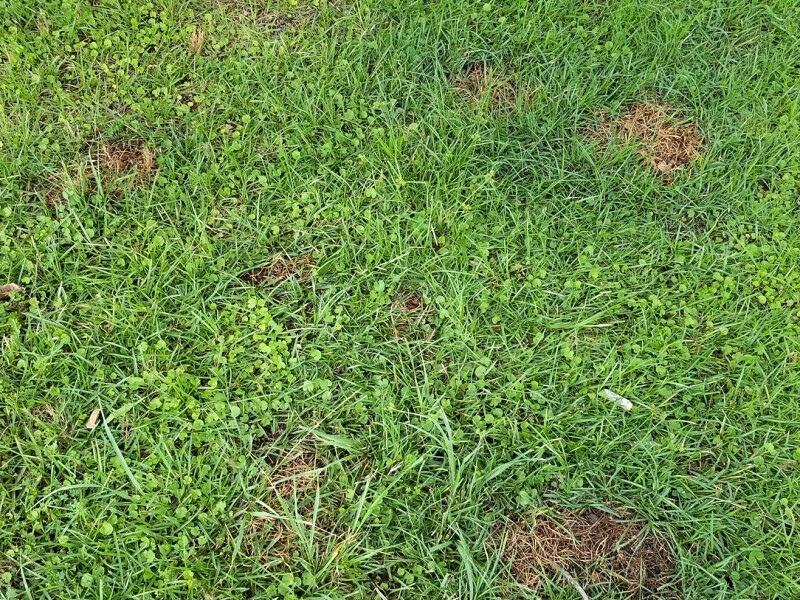
Urea, salts, and lactic acid are the urine components that damage turf, causing leaf tissue damage like an herbicide. Mild urea exposure acts like fertilizer, causing temporarily deeper green, faster-growing grass. Greater exposure causes straw-brown patches of dead grass, sometimes with darker, lusher perimeters. Severe urine damage is more likely to occur on drought-stressed turf in hot weather.
Dog urine impacts on a zoysia lawn. Photo: Grady Miller, NC State University
Patches of turf killed by dog urine, surrounded by slightly-greener grass. Photo: Rebekah D. Wallace, University of Georgia, Bugwood.org
Lawn damage from dog urine is difficult to remedy, and alternative groundcovers will not necessarily tolerate these conditions any better than turfgrass. Prompt watering of the spot will dilute the urine and reduce its impacts, though some turf injury may still result. For more information, refer to Dogs and Turfgrass Interactions (NC State Extension).
Poor drainage and soil compaction
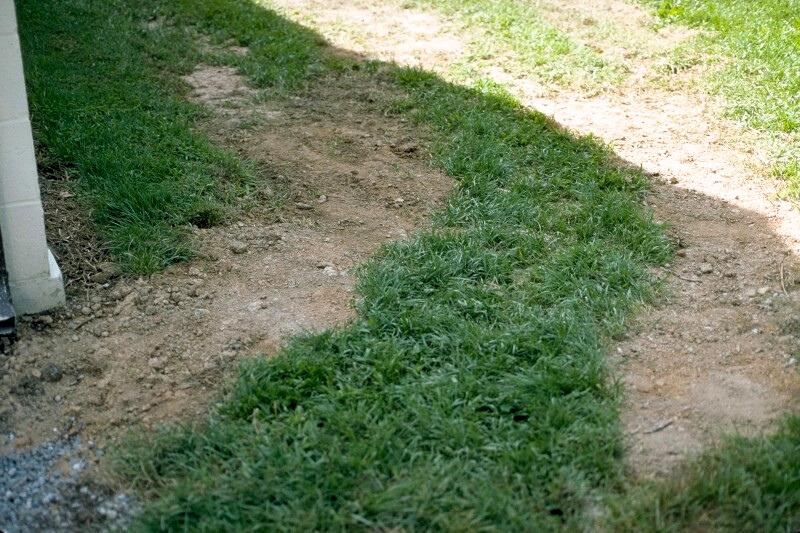
Turfgrass killed by soil compaction and heavy wear from foot traffic. Photo: David Clement, University of Maryland Extension
Air spaces between soil particles drain excess water and give roots access to oxygen. When soil is compressed, drainage worsens; there is less air for the roots, which can stress or kill turfgrass. Compacted soil is also harder to re-moisten after it gets too dry.
Foot traffic and driving on the soil (from riding mowers, cars, and construction equipment) cause compaction. Wet soil compacts more easily than dry soil.
Create pathways with mulch or paving stones through a lawn area where people or pets frequently travel to limit damage to the grass.
Manage water flow so downspout outlets and other sources of excess water don’t flood the soil. Rain barrels for downspouts and rain gardens for the landscape are helpful tools.
Aerate the lawn to alleviate compaction. This can be done just prior to overseeding using manual tools or by renting a machine. When renovating a lawn, amend the soil with organic matter (compost) if a laboratory soil test measures a low level. Organic matter content helps the soil resist compaction.
Replant areas with poor drainage with lawn alternatives, such as native perennials or shrubs that tolerate soil saturation or compaction.
Mower tire ruts
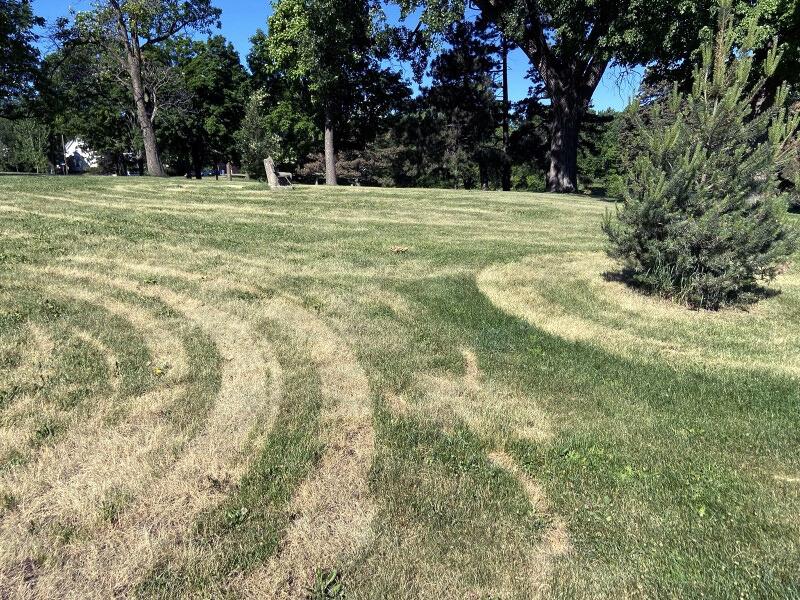
Following the same mowing path over time can create tire ruts in the lawn, especially from a heavier riding mower. Soil compaction in the ruts will make grass more vulnerable to problems like drought and weed growth. To prevent ruts, stagger the mowing path slightly with each mowing. For example, along a driveway or sidewalk, shift a mowing path that runs parallel to the pavement away from the edge by a few inches. A string trimmer can be used to mow what the mower doesn’t reach along the edge.
Drought stress and buried debris
Damage from walking or driving on drought-stressed turf. Photo: University of Minnesota Extension
It is normal for an established fescue lawn to go dormant in a hot, dry summer. Photo: Brian Kunkel, University of Delaware, Bugwood.org
Buried debris and underwatering during periods of dry weather can cause turfgrass to show symptoms of drought stress. Drought-stressed turf has much less tolerance for foot traffic. Buried debris is more of a problem in areas with recent construction, though it can be present in yards of any age. Naturally-occurring rocks that were covered over when the site was graded may also cause problems.
New lawns often grow normally and appear healthy until drought or another stress factor occurs. Buried debris interferes with root growth (turf roots typically grow at least 6 to 8 inches deep) and limits their access to moisture, making the grass more vulnerable to drying out. As stressed grass dies, the resulting brown patches may follow the shape of the buried object and generally appear more distinct in outline than patchy or scattered damage caused by disease or insects.
Lawn damage outlining a buried building foundation. Photo: William Fountain, University of Kentucky, Bugwood.org
Before searching for buried debris, rule out other causes of grass browning and decline (such as excess thatch or pest or disease damage) by comparing symptoms and taking recent weather impacts into account. Push a rod or slender stake into the ground to locate buried obstacles to remove. Dig up the underlying area, then level the soil and replant with new turfgrass.
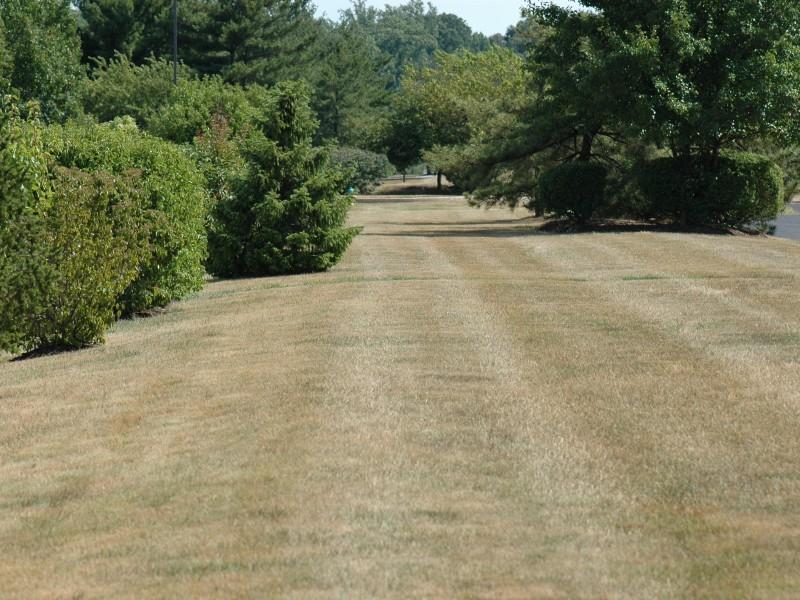
Irrigate drought-stressed lawns that were recently seeded or sodded. Established fescue and bluegrass lawns should be allowed to turn brown and go dormant instead of irrigating frequently to try to keep them green. Light, frequent watering is harmful because it encourages shallow roots (which are not as stress-resilient as deep roots) and it can benefit pests and diseases. Warm-season lawns (zoysia, bermudagrass) cope well with hot, dry weather, and should not require regular irrigation. Water only when/if the grass shows signs of stress, such as footprints that do not fade quickly or a color change of the grass blades to a duller blue-green or gray-green color.
Dull mower blades and mowing too low
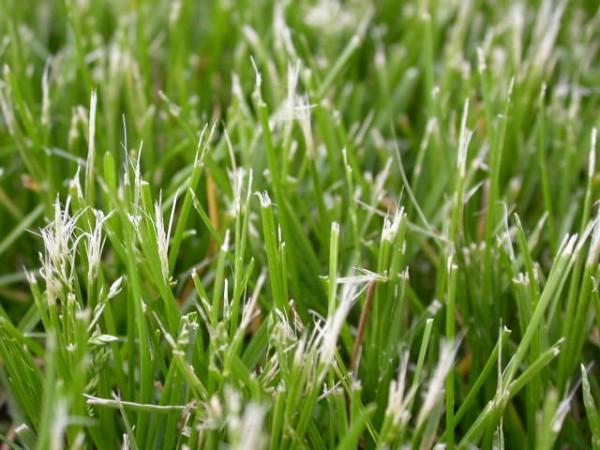
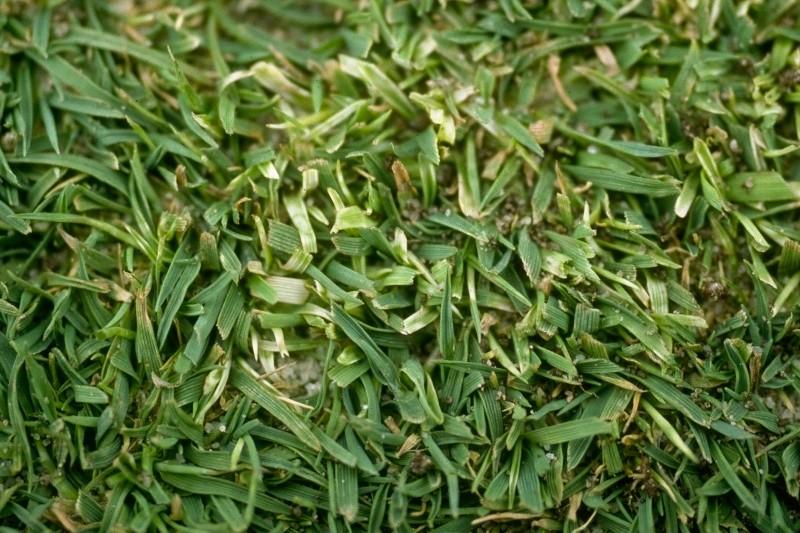
Frayed leaf tips caused by a dull mower blade. Photo: Cale Bigelow, Purdue University
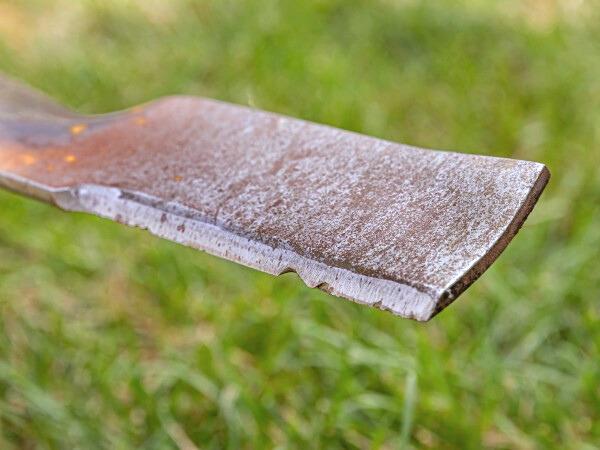
Dull, damaged mower blade. Photo: Adobe Stock
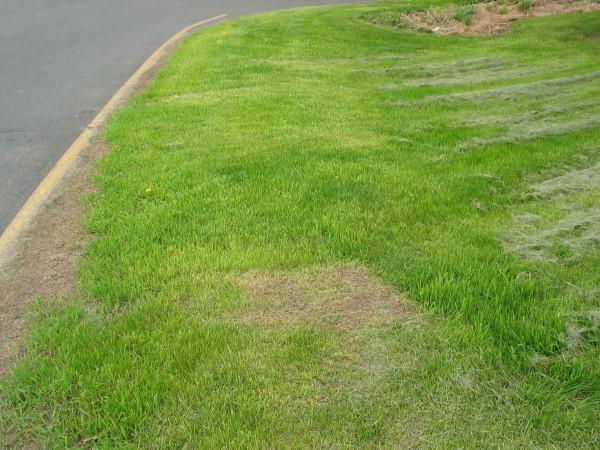
Low-cut “scalped” patches of lawn. Photo: Bob Mugaas, University of Minnesota Extension
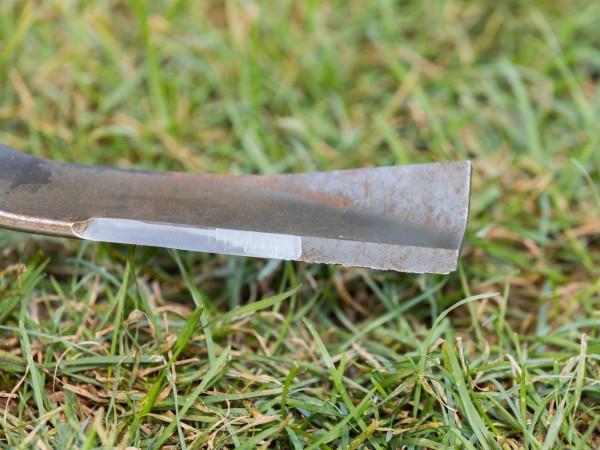
Comparison of sharpened (left) and dull (right) portions of a mower blade. Photo: Adobe Stock
Turfgrass damage from lawn mower blades can create an eyesore as well as an opportunity for diseases to infect the grass. Dull blades tear and fray leaf tips, which turn light brown as the injured tissue dries and dies. A low mowing height setting increases the risk of scalping the lawn – cutting too close to the ground, removing most of the grass blades and stems – especially when mowing over uneven ground.
Keep mower blades sharp. Ideally, blades should be sharpened after every 10 hours of use, but in general, sharpening twice a year (early spring and late summer) will suffice. Badly-damaged blades that are too rusty or deformed should be replaced.
Mow high.Mowing height will depend on grass type; for tall fescue, the highest option on most mowers (3 to 4 inches) is the best setting.
Level the soil. Where feasible, renovate areas of lawn that are too lumpy to mow evenly. Mole and vole runways, buried debris, and shallow tree roots can contribute to uneven ground, causing a mower to cut grass on the mounds too short. Scalped grass is more stressed, and weed seeds in soil exposed to more sunlight may germinate.
Nutrient deficiency
Chlorosis nutrient deficiency in turfgrass. Photo: Kevin Mathias, University of Maryland Extension
Low levels of certain nutrients in the soil can result in leaf blade yellowing; over time, this weakening of the plants can lead to lawn decline as the grass becomes more sparse. Sparse growth can contribute to erosion and allow more weeds to colonize the lawn.
Nitrogen deficiency can cause leaf yellowing. Iron and manganese deficiencies can cause chlorosis, when leaf veins stay green as the rest of the leaf yellows. In some cases, soil acidity (pH) levels outside of the range tolerated by turfgrass are the reason for poor root absorption of nutrients, even with no soil deficiency. Measuring soil nutrient levels and pH with a laboratory soil test is the best way to determine how much fertilizer to apply and if lime is needed to adjust acidity.
Most lawn grasses require annual nitrogen applications to resist pests, outgrow disease, and withstand weather stress damage. The amount of supplemental nitrogen can be reduced if the lawn has a high organic matter level, contains some microclover, or if a mulching mower is used which returns grass clippings to the lawn to recycle nutrients as the fragments decompose.
Maryland law restricts when lawn fertilizer can be applied, and the type of grass grown will determine when applications most benefit the grass.
Excess thatch
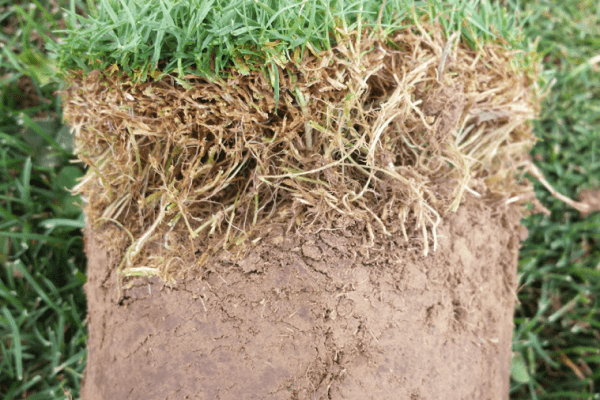
A thatch layer thick enough to need addressing. Photo: Gregg Munshaw
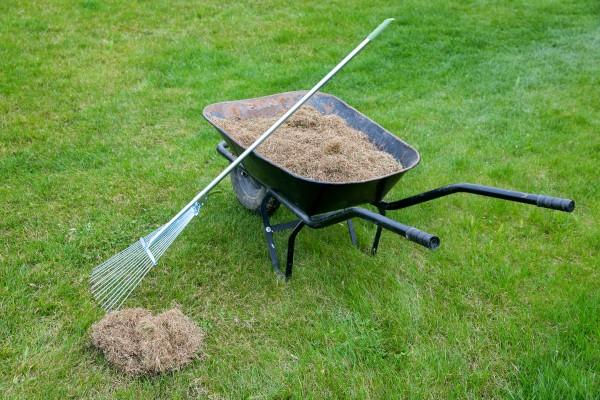
Removing thatch manually with a rake. Photo: Adobe Stock
Thatch is the intermingled layer of living and dead stems, leaves, and roots that exist between the soil and top growth. Zoysia, bermudagrass, and Kentucky bluegrass tend to produce lots of thatch. That accumulation can increase through nitrogen over-fertilization which stimulates excessive growth and hampers decomposing organisms in the soil, and through earthworm decline from the use of certain insecticides and fungicides on the lawn.
Excessive thatch (1 inch thick or more) can cause a variety of lawn problems by:
inhibiting water and air from reaching the root zone, reducing turf tolerance to drought and temperature extremes
providing shelter for pest insects (sod webworms, chinch bugs, billbugs) and fungal pathogens
preventing some insecticides, fungicides, and herbicides from entering the soil
interfering with overseeding, since seed cannot reach the soil surface
Use a dethatching machine (vertical mower or power rake) or a sturdy steel rake for manual removal during active grass growth so the lawn recovers quickly. Dethatch zoysia lawns in early summer; dethatch Kentucky bluegrass lawns in early autumn.
Author: Miri Talabac, Lead Horticulture Coordinator, HGIC. March 2026.
Content reviewed by: Geoff Rinehart, Lecturer and Turfgrass Management Advisor, Institute of Applied Agriculture, September 2025. David Clement, Ph.D., Extension Specialist in Plant Pathology, December 2025.
Copy editing by Nancy Klein, Maryland Master Gardener, December 2025.